21st Sep, 2026| 5 Min read.
Asset Sale vs Business Sale – What’s the Difference?
Selling a business is not always the same as selling its assets. While the terms are sometimes used interchangeably, an asset sale and a business sale can involve very different things. The biggest difference is what the buyer is actually acquiring. In an asset sale, the transaction generally focuses on selected assets of the business, ...
Selling a business is not always the same as selling its assets. While the terms are sometimes used interchangeably, an asset sale and a business sale can involve very different things.
The biggest difference is what the buyer is actually acquiring.
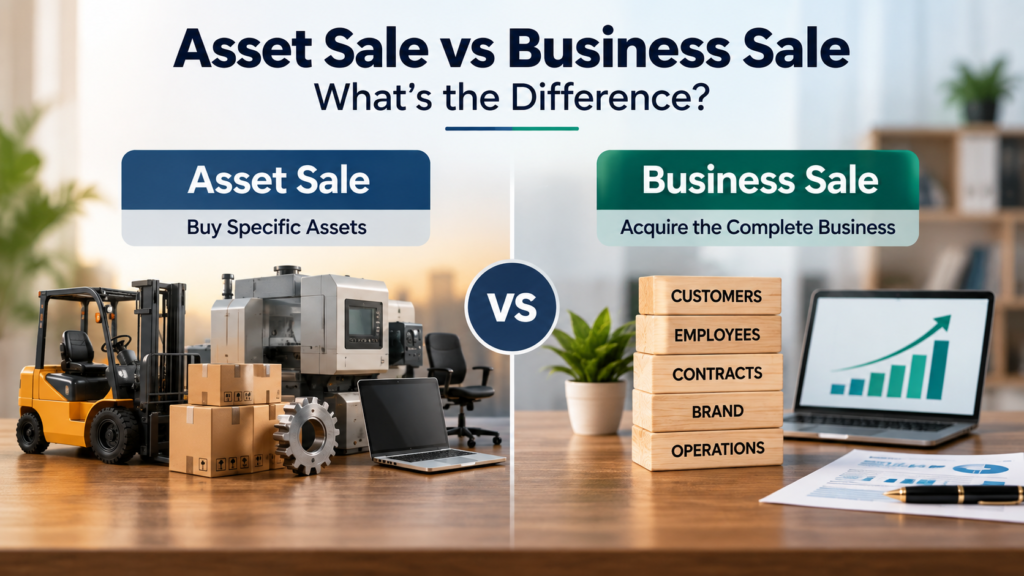
In an asset sale, the transaction generally focuses on selected assets of the business, such as machinery, equipment, inventory, furniture, vehicles, intellectual property, or other specified assets. In a business sale, the buyer may acquire the operating business as a whole, including its established operations, assets, customer relationships, contracts, goodwill, and other elements included in the transaction.
Understanding this difference is important for both buyers and sellers because it can affect the price, liabilities, contracts, employees, licences, taxes, and the way the transaction is structured.
This guide explains the difference between an asset sale and a business sale in simple terms.
What Is an Asset Sale?
An asset sale is a transaction where a buyer purchases specific assets belonging to a business rather than necessarily acquiring the entire business entity.
For example, a manufacturing business might sell:
- Machinery
- Production equipment
- Furniture
- Vehicles
- Inventory
- Computers
- Tools
- Certain intellectual property
- Other specified business assets
The buyer and seller generally identify which assets are included in the transaction.
The business itself may continue to exist after the sale unless the seller decides to close or restructure it.
Simple Example
Imagine a manufacturing unit owns machinery, equipment, inventory, furniture, and other assets.
A buyer may be interested only in purchasing the machinery and equipment to use in another operation.
In that situation, the transaction can be structured around those specific assets rather than the entire operating business.
What Is a Business Sale?
A business sale generally involves the transfer of an operating business or an ownership interest in the entity that owns and operates the business.
Depending on the structure, the buyer may acquire a combination of:
- Business assets
- Customer relationships
- Brand or trade name
- Goodwill
- Employees
- Supplier relationships
- Business processes
- Contracts
- Intellectual property
- Inventory
- Equipment
- Business premises or lease rights
- Other operating components
The exact scope depends on the agreement between the buyer and seller and the legal structure of the transaction.
BizzXchange’s marketplace, for example, includes opportunities across different business structures and industries, with listings showing information such as business nature, industry, asking amount, equity offered, turnover, and EBITDA where provided.
Why Does the Difference Matter to a Buyer?
For a buyer, the difference between an asset sale and a business sale can significantly affect the opportunity.
Buying Assets
If you purchase selected assets, you may have to build or arrange the rest of the operation yourself.
For example, buying machinery does not automatically give you:
- Existing customers
- Employees
- Supplier relationships
- Brand recognition
- Established revenue
- Operating processes
The value may therefore be concentrated in the assets themselves.
Buying an Operating Business
When purchasing an operating business, the buyer may be acquiring a combination of tangible and intangible value.
This can include:
- Existing customers
- Revenue history
- Employees
- Supplier relationships
- Brand
- Business processes
- Equipment
- Inventory
- Established location
However, an operating business may also come with existing obligations and risks, which is why proper due diligence is important.
Why Does the Difference Matter to a Seller?
For a seller, the choice between selling assets and selling an operating business can affect the transaction structure and what remains after the sale.
A seller should consider:
- Which assets are being sold?
- Is the business continuing after the transaction?
- Are contracts transferable?
- What happens to employees?
- What happens to existing liabilities?
- Is the brand included?
- Is intellectual property included?
- Is inventory included?
- What happens to the business premises?
- How will the transaction be documented?
The seller should also understand whether the buyer is interested in the entire operating business or only specific assets.
Asset Sale vs Business Sale: Which One Is Better?
There is no universal answer.
The appropriate structure depends on the circumstances of the buyer, seller, business, assets, liabilities, contracts, tax considerations, and applicable legal requirements.
An asset-focused transaction may make sense when:
- The buyer wants specific assets.
- The buyer does not want the entire business.
- Particular equipment or property is the main attraction.
- The parties want to clearly identify what is being transferred.
A business acquisition may make sense when:
- The buyer wants an operating business.
- Existing customers are important.
- The business has established revenue.
- Employees and operating systems are valuable.
- The buyer wants to continue an existing business model.
The decision should be evaluated based on the specific transaction rather than assuming one structure is always preferable.
Documents to Review Before a Transaction
Depending on the type of transaction, buyers and sellers may need to review documents such as:
- Business registration documents
- Ownership records
- Financial statements
- Tax records
- Loan documents
- Asset lists
- Inventory records
- Property or lease documents
- Employee records
- Major customer and supplier agreements
- Licences and permits
- Intellectual property records
- Legal documents
- Insurance records
Not every document needs to be shared at the earliest stage. Sensitive information should be handled carefully and shared at the appropriate stage of the transaction.
Common Mistakes to Avoid
Focusing Only on the Asking Price
A low purchase price does not necessarily mean a better opportunity. Buyers should understand what is actually included.
Assuming All Liabilities Are Excluded
The treatment of liabilities depends on the transaction structure and applicable agreements. Buyers should verify this rather than make assumptions.
Ignoring Intangible Assets
Customers, brand recognition, intellectual property, supplier relationships, and established processes can have significant commercial value.
Failing to Verify Asset Ownership
Before purchasing an asset, confirm that the seller has the right to sell it and identify any financing, security interests, or other restrictions that may apply.
Not Reviewing Contracts
Important business relationships may depend on contracts that contain assignment, change-of-control, termination, or other relevant provisions.
Relying Only on Seller-Provided Numbers
Financial information should be reviewed and verified through appropriate due diligence.
Asset Sale or Business Sale: The Key Takeaway
The simplest way to remember the difference is:
An asset sale focuses on what the business owns. A business sale focuses on the operating business and the elements that allow it to continue as an enterprise.
An asset transaction can involve selected machinery, inventory, equipment, property, intellectual property, or other identified assets.
A business acquisition can involve a broader combination of assets, customers, employees, contracts, goodwill, operations, and other components of an established business.
The right approach depends on what the buyer wants to acquire and what the seller wants to transfer.
For significant transactions, buyers and sellers should obtain appropriate professional advice to understand the legal, tax, financial, and contractual implications of the proposed structure.
Find Business Opportunities on BizzXchange
If you are considering buying an existing business rather than building one from scratch, BizzXchange provides an online marketplace where buyers can explore business and investment opportunities across different industries and locations in India. The platform allows users to filter opportunities by factors such as business nature, industry, and established year, and individual listings can provide information such as asking amount, equity offered, turnover, and EBITDA where available.
BizzXchange also supports sellers looking to present their businesses to potential buyers through its online platform.
Whether you are looking to buy a running business, sell an existing business, or explore investment opportunities, start by understanding exactly what is being offered and carry out appropriate due diligence before making a decision.