14th Aug, 2026| 5 Min read.
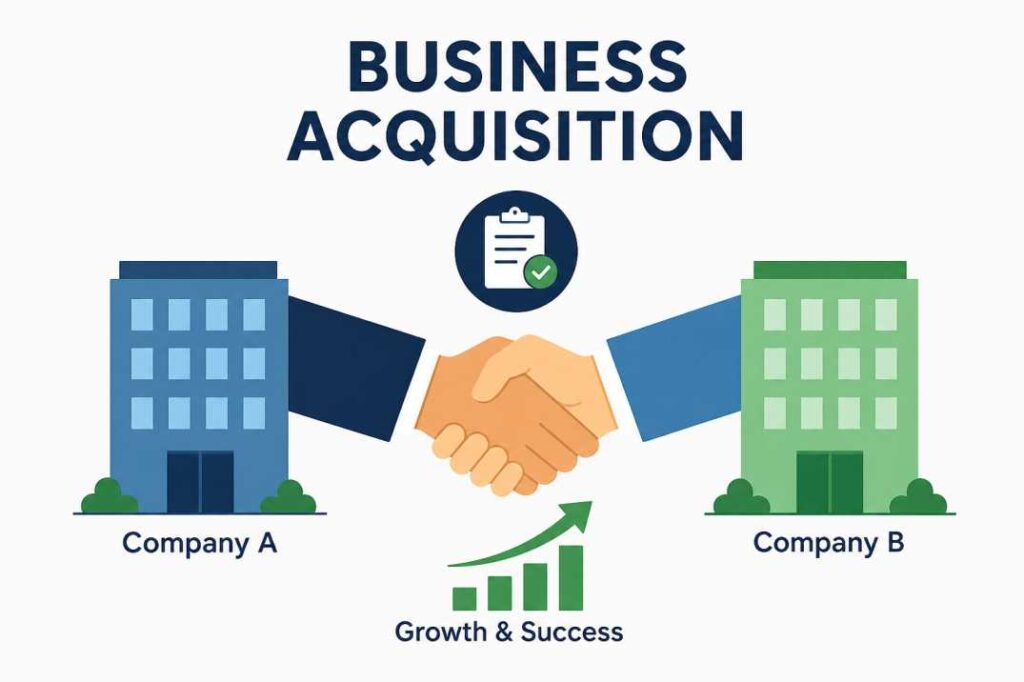
Benefit of running business acquisition or takeover or takeover?
Running a business through acquisition (buying an existing business instead of starting from scratch) can be powerful—but only if done thoughtfully. Here are the real benefits, without the hype: 1. Immediate Cash Flow Unlike a startup, an acquired business usually already has: *Customers *Revenue stream *Supplier network So you start earning from day one (if ...
Running a business through acquisition (buying an existing business instead of starting from scratch) can be powerful—but only if done thoughtfully. Here are the real benefits, without the hype:
1. Immediate Cash Flow
Unlike a startup, an acquired business usually already has:
*Customers
*Revenue stream
*Supplier network
So you start earning from day one (if the business is healthy).
2. Established Brand & Reputation
You’re not building trust from zero. The business already has:
*Market recognition
*Customer loyalty
*Possibly goodwill value
That saves years of marketing effort.
3. Lower Startup Risk (but not zero)
Startups fail at high rates. With acquisition:
*Business model is already tested
*Financial history is available
*You can analyze past performance before buying
But don’t assume it’s “safe”—many businesses are sold because of hidden problems.
4. Faster Growth
Instead of building slowly, you can:
*Expand an existing operation
*Add new products/services quickly
*Enter new markets instantly
This is especially useful if you already run another business.
5. Easier Financing
Banks and investors are more comfortable funding:
*A running business with financial records
vs
*A completely new idea
This increases your chances of getting loans or investors.
6. Existing Team & Systems
You get:
*Experienced employees
*Operational processes
*Vendor relationships
This reduces the initial management burden.
7. Synergy Benefits (if you already have a business)
If you already run a business, acquisition can:
*Reduce costs (shared resources)
*Increase sales (cross-selling)
*Strengthen market position
8. Asset Value
Sometimes you’re not just buying profits—you’re buying:
*Land/building
*Machinery
*Licenses
*Contracts
These can have independent value.
⚠️ Important Reality Check
Acquisition is not always better than starting fresh. Common risks:
*Hidden liabilities (tax, legal, debt)
*Declining business disguised as profitable
*Overpaying due to wrong goodwill calculation
*Cultural issues with existing staff
✔️ When Acquisition Makes the Most Sense
It works best when:
*The business has stable profits (not declining)
*You understand the industry
*You can improve operations or expand
*You buy at a fair valuation (not emotional price)