13th Aug, 2026| 5 Min read.
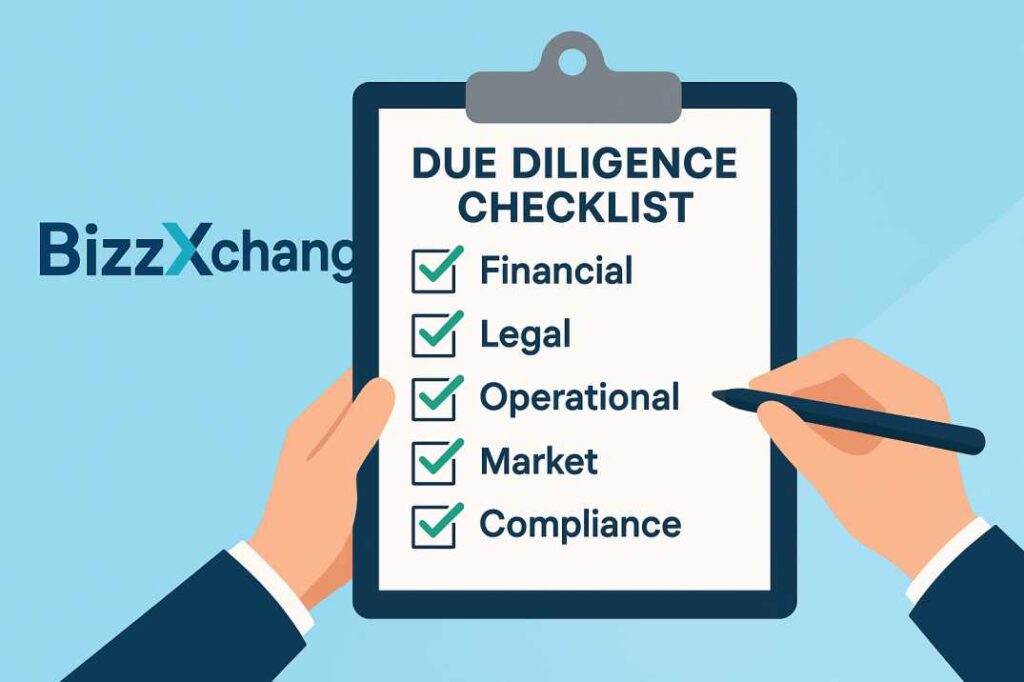
Due Diligence Checklist
1. Financial Due Diligence 2. Legal Due Diligence 3. Operational Due Diligence 4. Human Resource Due Diligence 5. Market & Strategic Due Diligence 6. Valuation & Deal Structure ✅ Final Step: Professional Involvement Before closing the deal:
1. Financial Due Diligence
- ✅ Review last 3–5 years audited financial statements (P&L, Balance Sheet, Cash Flow).
- ✅ Check bank statements for consistency with reported revenues.
- ✅ Verify outstanding debts, loans, and overdrafts.
- ✅ Analyze tax returns filed and confirm there are no pending disputes.
- ✅ Review accounts receivable (who owes money, how old are the dues).
- ✅ Review accounts payable (suppliers/vendors waiting for payment).
- ✅ Confirm value and condition of assets (machinery, land, inventory, vehicles).
- ✅ Look at profit margins, sales trends, and seasonality.
2. Legal Due Diligence
- ✅ Verify business registration documents (Certificate of Incorporation, GST, PAN, TAN).
- ✅ Check all licenses and permits are valid (industry-specific approvals).
- ✅ Review MOA, AOA, partnership agreements, LLP deed (as applicable).
- ✅ Check for ongoing or past litigation (labour disputes, consumer cases, supplier cases).
- ✅ Verify intellectual property rights (patents, trademarks, copyrights).
- ✅ Review rental/lease agreements of office, factory, or warehouse.
- ✅ Ensure compliance with labour laws (PF, ESI, gratuity, bonus).
3. Operational Due Diligence
- ✅ Inspect machinery, IT systems, software, and equipment (age, efficiency, maintenance).
- ✅ Review supplier and vendor contracts (terms, duration, dependence on few suppliers).
- ✅ Check customer contracts (especially long-term or bulk buyers).
- ✅ Assess inventory quality (no expired, obsolete, or damaged stock).
- ✅ Review IT systems, ERP, or CRM software being used.
- ✅ Analyze business processes (are they well-documented or founder-dependent?).
4. Human Resource Due Diligence
- ✅ Review list of employees, their designations, and salaries.
- ✅ Check employment contracts and non-compete agreements.
- ✅ Verify PF/ESI contributions and labour law compliance.
- ✅ Understand dependency on key employees or the founder.
- ✅ Identify pending dues (gratuity, bonus, incentives).
5. Market & Strategic Due Diligence
- ✅ Analyze industry trends (growing, stable, or declining).
- ✅ Study competitor landscape (pricing, market share, threats).
- ✅ Review customer concentration risk (is revenue dependent on 1–2 clients?).
- ✅ Assess brand reputation and goodwill in the market.
- ✅ Check distribution channels, sales partners, and online presence.
- ✅ Evaluate growth potential & scalability of the business.
6. Valuation & Deal Structure
- ✅ Decide on valuation method (Asset-based, Income-based, or Market-based).
- ✅ Check if asking price includes goodwill (and whether it’s justified).
- ✅ Plan payment structure (lump sum, installments, or earn-out based on performance).
- ✅ Negotiate warranties and indemnities (seller takes responsibility for hidden liabilities).
- ✅ Finalize non-compete clause (seller cannot start same business immediately).
✅ Final Step: Professional Involvement
Before closing the deal:
- Hire a Chartered Accountant (CA) → for financial audit.
- Hire a Lawyer → for legal compliance, contracts, and liabilities.
- Hire an Industry Expert → for operational and market analysis.