14th Aug, 2026| 5 Min read.
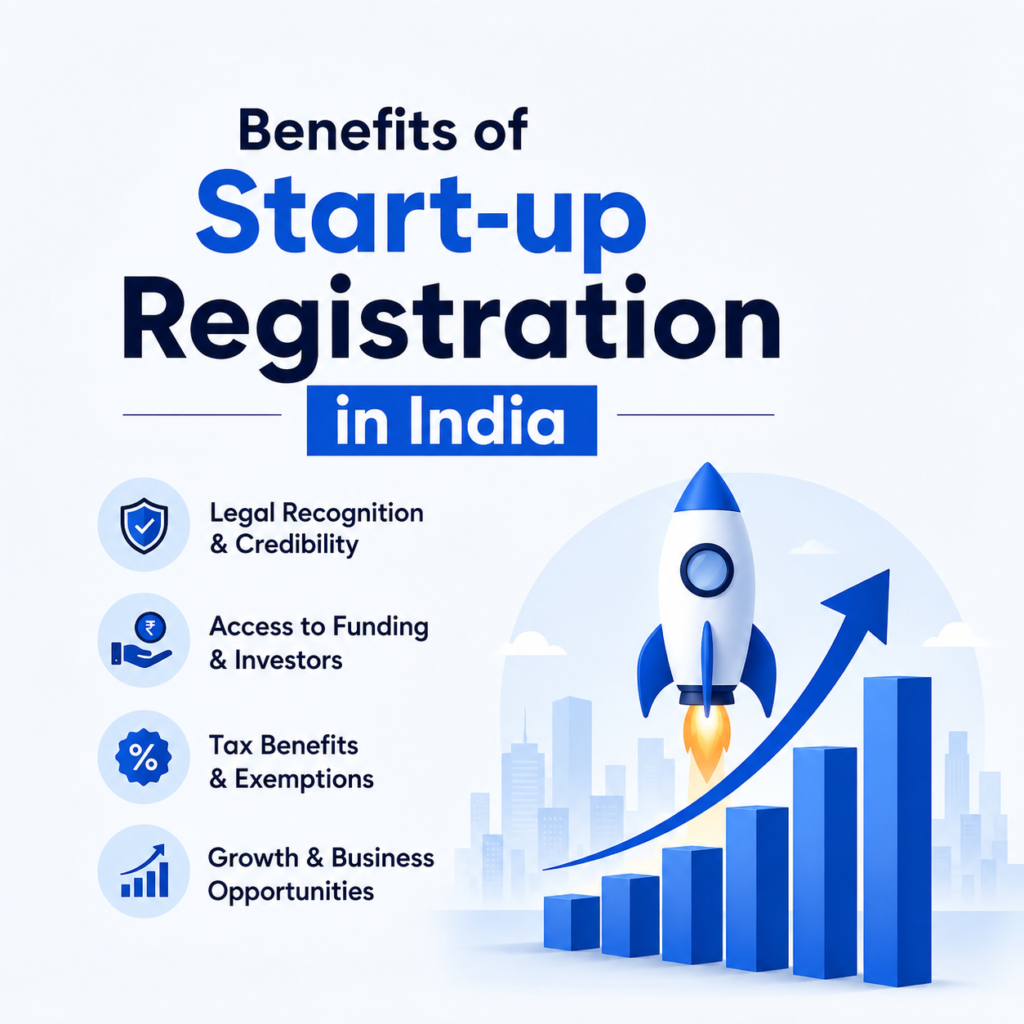
What are the benefits of start-up Registration in India?
Detailed Benefits of Startup Registration in India 1.Income Tax Exemption (Major Benefit) Eligible startups get a 100% tax exemption on profits for 3 consecutive years out of the first 10 years under Section 80-IAC. Practical Impact: Conditions: 2. Angel Tax Exemption (Big Relief for Funding) Normally, if a company receives investment above fair value, it is taxed ...
Detailed Benefits of Startup Registration in India
1.Income Tax Exemption (Major Benefit)
Eligible startups get a 100% tax exemption on profits for 3 consecutive years out of the first 10 years under Section 80-IAC.
Practical Impact:
- If your startup earns ₹10 lakh profit/year → you save ~₹2.5–3 lakh tax annually
- Helps in reinvesting money into business growth instead of paying taxes
Conditions:
- Must be recognized by DPIIT
- Should be innovative or scalable
2. Angel Tax Exemption (Big Relief for Funding)
Normally, if a company receives investment above fair value, it is taxed (Angel Tax).
Registered startups get exemption under Section 56, meaning:
- No tax on funds received from investors
- Attracts angel investors easily
Example:
If your startup gets ₹50 lakh investment → no extra tax liability
3.Easy Compliance & Self-Certification
Startups can self-certify compliance under:
- 6 Labour Laws
- 3 Environmental Laws
Benefits:
- No frequent inspections
- Less legal pressure
- Saves compliance cost
Ideal for new entrepreneurs who don’t want heavy legal burden initially.
4.Fast-Track Patent, Trademark & IPR
With support from the government:
- 80% rebate on patent filing fees
- 50% rebate on trademark filing
- Fast-track processing
Supported by organizations like SIDBI.
Practical Benefit:
- Protect your brand and innovation at low cost
- Faster approval → competitive advantage
5.Easy Access to Funding & Government Schemes
Government has created a Fund of Funds (₹10,000+ crore corpus) to support startups.
Startups get:
- Access to venture capital funding
- Startup grants
- Priority in MSME & innovation schemes
Supported by initiatives like Atal Innovation Mission.
6. Easier Participation in Government Tenders
Normally, tenders require:
- Minimum turnover
- Prior experience
Startups get exemptions:
- Can apply without experience
- No turnover requirement
Benefit:
- Even a new startup can win government contracts
7. Easy Exit (Fast Closure)
Under the Insolvency & Bankruptcy Code (IBC):
- Startup can close within 90 days
Why important?
- Reduces risk for entrepreneurs
- Encourages experimentation without fear
8.Better Credibility & Branding
Being a registered startup:
- Builds trust with clients & investors
- Improves business image
- Helps in partnerships
Example:
Investors prefer DPIIT-recognized startups over unregistered businesses.
9.Networking, Mentorship & Incubation
Access to:
- Government incubators
- Startup events & expos
- Mentorship programs
Helps in:
- Learning from experts
- Connecting with investors
- Scaling faster
- 10.Global Exposure & Expansion
Registered startups get:
- Opportunities in international startup programs
- Government support for global expansion
Helps in entering foreign markets easily.
Eligibility (Important)
To get these benefits, your startup must:
- Be a Private Limited Company / LLP / OPC
- Age ≤ 10 years
- Turnover ≤ ₹100 crore
- Focus on innovation / improvement / scalable model
Simple Conclusion
Startup Registration is highly beneficial if you want to:
- Save tax
- Raise funding easily
- Reduce compliance burden
- Grow faster with government support