21st Sep, 2026| 5 Min read.
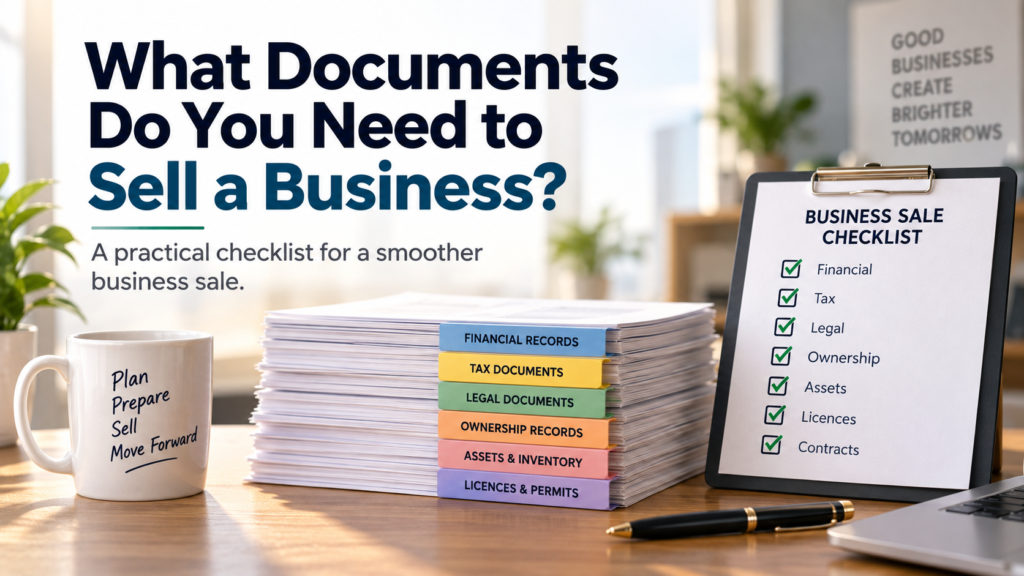
What Documents Do You Need to Sell a Business? A Complete Seller’s Checklist
Selling a business is more than agreeing on a price with a buyer. Before a serious buyer can evaluate the opportunity, you will usually need to provide documents that explain the business’s financial position, ownership, operations, assets, liabilities, and legal status. Having these documents ready can make the selling process more organized and can help ...
Selling a business is more than agreeing on a price with a buyer. Before a serious buyer can evaluate the opportunity, you will usually need to provide documents that explain the business’s financial position, ownership, operations, assets, liabilities, and legal status.
Having these documents ready can make the selling process more organized and can help buyers understand what they are actually considering.
The exact documents required will depend on the type of business, industry, ownership structure, assets involved, and whether the transaction involves an asset sale, share/equity transfer, or another arrangement. However, most business sales involve several common categories of information.
Here is a practical checklist of the documents you may need when preparing to sell a business.
1. Business Registration and Ownership Documents
The first set of documents should establish that the business exists legally and identify who owns it.
Depending on the business structure, these may include:
- Business registration or incorporation documents
- Certificate of incorporation, where applicable
- Partnership deed
- LLP-related documents, where applicable
- Proprietorship-related registration documents
- Memorandum and Articles of Association, where applicable
- Shareholding details
- Ownership records
- Partnership or shareholder agreements
- Board resolutions or ownership approvals related to the proposed sale
2. Financial Statements and Accounting Records
Financial information is one of the most important parts of a business sale.
A buyer generally wants to understand how the business has performed historically and what its current financial position looks like.
Prepare relevant records such as:
- Profit and loss statements
- Balance sheets
- Cash-flow statements
- Income and expense records
- Financial statements for previous years
- Current-year financial information
- Revenue records
- Major expense details
- Accounts receivable
- Accounts payable
- Outstanding loans and borrowings
- Details of other financial liabilities
3. Tax Documents
Tax records can be an important part of the buyer’s due diligence process.
Depending on the business and applicable requirements, documents may include:
- Income tax returns
- GST registration and relevant GST records
- GST returns
- Tax payment records
- Tax assessments
- Notices received from tax authorities
- Details of outstanding tax liabilities
- Other applicable statutory tax records
4. Bank and Loan Documents
Buyers may also need to understand the business’s financial obligations.
Prepare relevant information relating to:
- Business bank accounts
- Business loans
- Working capital facilities
- Equipment financing
- Outstanding borrowings
- Security or collateral arrangements
- Repayment schedules
- Guarantees
- Other material financial commitments
5. Contracts and Agreements
A running business often depends on agreements with customers, suppliers, landlords, employees, distributors, service providers, or other parties.
Important contracts may include:
- Customer agreements
- Supplier agreements
- Distribution agreements
- Franchise agreements
- Lease or rental agreements
- Service contracts
- Maintenance agreements
- Vendor contracts
- Technology agreements
- Long-term commercial arrangements
6. Property and Lease Documents
If the business operates from a physical location, property-related documentation may be important.
This can include:
- Property ownership documents
- Lease agreements
- Rental agreements
- Renewal terms
- Security deposit details
- Property-related permissions
- Details of property-related liabilities
- Documents relating to major improvements or modifications
7. Licences, Registrations and Permits
Certain businesses cannot operate without specific registrations, licences, approvals, or permits.
Depending on the industry, you may need to organize:
- Business licences
- Industry-specific registrations
- Trade licences
- Local authority permissions
- Regulatory approvals
- Environmental permissions, where applicable
- Health or safety-related approvals
- Professional licences
- Operating permits
8. Employee and HR Documents
Employees can represent a significant part of a running business.
Relevant information may include:
- Employee list
- Job roles
- Salary information
- Employment agreements
- Benefits and incentives
- Pending employee claims
- Statutory employment records
- Leave or other outstanding obligations
- Details of key employees
9. Asset and Inventory Records
If physical assets are part of the business, prepare a clear record of what is included in the proposed sale.
This may include:
- Machinery
- Equipment
- Furniture
- Vehicles
- Computers and technology equipment
- Tools
- Inventory
- Fixtures and fittings
- Other significant business assets
10. Intellectual Property Documents
A business may have valuable intangible assets that need to be identified.
These can include:
- Trademarks
- Brand names
- Logos
- Copyrighted materials
- Domain names
- Software
- Proprietary technology
- Designs
- Patents, where applicable
- Marketing assets
- Social media accounts
11. Customer and Supplier Information
Customer relationships can be one of the most valuable parts of an established business.
Useful information may include:
- Customer concentration
- Major customer agreements
- Recurring customers
- Supplier relationships
- Major suppliers
- Outstanding customer commitments
- Recurring contracts
- Sales channels
12. Business Performance and Sales Data
Financial statements tell part of the story. Buyers may also want to understand how the business generates revenue.
Depending on the business, useful records can include:
- Monthly sales figures
- Revenue by product or service
- Sales by location
- Major customer contribution
- Order history
- Recurring revenue
- Marketing performance
- Sales pipeline
- Business growth trends
13. Legal and Dispute-Related Documents
If the business has been involved in any legal proceedings, claims, disputes, or notices, relevant documents may need to be disclosed during due diligence.
These may include:
- Pending litigation
- Legal notices
- Regulatory notices
- Customer disputes
- Supplier disputes
- Employee disputes
- Settlement agreements
- Arbitration matters
- Material legal correspondence
14. Insurance Documents
Insurance policies can also be relevant, particularly for businesses with physical premises, employees, vehicles, machinery, or significant operational risks.
Depending on the business, prepare:
- Current insurance policies
- Policy schedules
- Renewal information
- Claims history
- Coverage details
- Relevant insurance correspondence
15. Business Debts and Liabilities
One of the most important questions for a buyer is:
“What liabilities will I be taking on?”
Prepare a clear summary of known liabilities, such as:
- Bank loans
- Supplier payments
- Employee-related obligations
- Tax liabilities
- Lease obligations
- Outstanding customer refunds
- Legal liabilities
- Equipment financing
- Other material commitments
When Should You Prepare These Documents?
Ideally, before you start serious discussions with potential buyers.
You do not necessarily need to send every document to every person who shows interest.
A more organized process is to prepare the documents in stages.
Stage 1: Initial Business Information
Start with basic information such as:
- Business type
- Industry
- Location
- Years in operation
- Asking price
- Revenue
- Profitability
- Assets
- Reason for sale, where appropriate
Stage 2: Serious Buyer Discussion
Once a buyer demonstrates genuine interest, additional business and financial information can be shared as appropriate.
Stage 3: Due Diligence
At this stage, the buyer may review more detailed financial, legal, operational, ownership, asset, tax, and contractual documentation.
Stage 4: Transaction
The final documentation depends on the structure and terms of the transaction and should be reviewed by the appropriate professional advisers.
Common Mistakes Sellers Should Avoid
1. Waiting Until the Last Minute
Collecting documents only after finding a buyer can slow down the process.
2. Providing Inconsistent Information
Revenue, expenses, ownership details, assets, and liabilities should be consistent across the documents you provide.
3. Hiding Known Liabilities
Undisclosed obligations can create problems during due diligence and negotiations.
4. Sharing Sensitive Information Too Early
Not every interested person needs access to confidential customer, employee, financial, or commercial information.
5. Forgetting About Digital Assets
Websites, domains, software, online accounts, databases, social media accounts, and digital intellectual property may also be important business assets.
6. Assuming Every Licence Automatically Transfers
Some registrations and permissions may have specific transfer requirements. Check the applicable rules before representing that a licence will transfer with the business.
Sell Your Business Through BizzXchange
If you are planning to sell a running business, BizzXchange provides an online platform where business owners can list their business details and connect with interested buyers. Sellers can create an account, provide their business information, submit the listing for approval, and connect with interested parties through the platform.
BizzXchange supports opportunities across different business types and industries, allowing sellers to present information such as business category, location, asking amount, turnover, EBITDA, and equity offered where applicable.
If you are ready to sell your business, prepare your documents, organize your business information, and explore the opportunity to list your business on BizzXchange.